
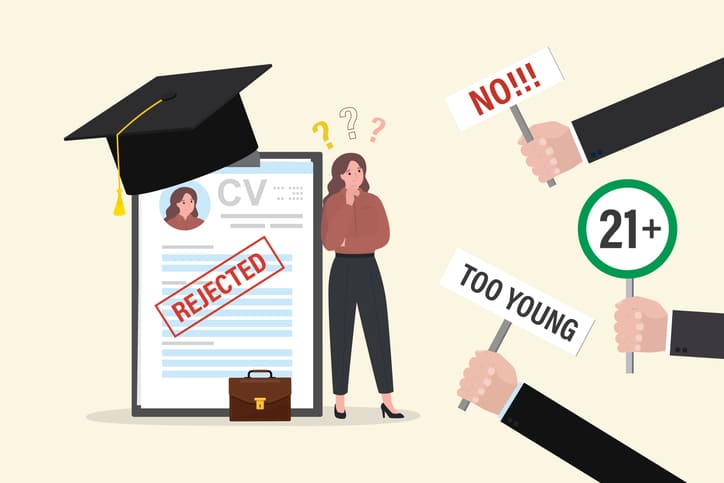
Unfair hiring practices are not always intentional. In many cases, they develop through habits, time pressure, or outdated processes rather than deliberate exclusion. Still, even unintentional practices can shape who gets seen, who advances, and who gets hired.
Understanding how unfair hiring practices show up helps organizations spot gaps in their process and make more consistent, thoughtful decisions.
Below are five common examples that appear across the job market and why they matter.
1. Relying Too Heavily on Referrals
Employee referrals can be valuable. They often lead to faster hires and smoother onboarding. Problems arise when referrals become the primary or only source of candidates.
Most professional networks reflect similar backgrounds, education paths, and career access. When hiring depends too much on referrals, the candidate pool can narrow without anyone realizing it.
This practice limits visibility rather than intent. Expanding sourcing alongside referrals helps ensure more candidates have a real chance to be considered.
2. Using “Culture Fit” Without Clear Definition
Culture fit sounds reasonable, but it often lacks structure. When interviewers rely on instinct or personal comfort to assess fit, decisions become subjective.
Without clear criteria, culture fit can turn into shorthand for familiarity. That creates inconsistent outcomes and makes it harder to explain why one candidate moved forward while another did not.
Teams get better results when they define what culture means in measurable terms, such as communication style, accountability, or collaboration, rather than personal similarity.
3. Asking Different Interview Questions for Each Candidate
Inconsistent interviews create inconsistent decisions. When candidates face different questions, evaluators end up comparing impressions instead of evidence.
This practice introduces bias through variation. It also makes feedback harder to justify and hiring outcomes harder to defend internally.
Structured interviews help level the field. Asking the same core questions allows teams to evaluate candidates based on comparable information instead of memory or instinct.
4. Listing Requirements That Are Not Truly Necessary
Job descriptions often include requirements that reflect ideal candidates rather than realistic needs. Over time, these lists grow longer and more rigid.
Unnecessary degree requirements, inflated years of experience, or narrow industry backgrounds can filter out strong candidates before the interview stage. That reduces access without improving quality.
Clear alignment between job requirements and actual performance needs leads to broader, more accurate candidate pools.

5. Making Decisions Under Rushed Timelines
Hiring pressure changes behavior. When teams need someone immediately, shortcuts appear. Interview steps get skipped. Evaluation standards shift. Decisions rely more heavily on first impressions.
Speed alone does not cause unfair hiring practices, but unmanaged urgency can weaken consistency. Slowing down just enough to apply the same process to every candidate helps protect fairness without sacrificing efficiency.
Final Thoughts
Fairness in hiring does not require perfection. It requires awareness, consistency, and intention. When teams understand where unfair hiring practices tend to appear, they gain more control over outcomes and build stronger, more transparent processes.
Looking to improve how hiring decisions are made?
Let’s talk about how we can support your staffing needs.