

You don’t usually find out in a clean way.
There’s no big announcement. No clear line in the sand. Things just start getting weird.
A role you were about to open suddenly needs another approval. A backfill gets pushed. Someone leaves and instead of replacing them, you’re told to “hold for now.”
At some point it clicks. You’re not really hiring anymore. Or at least not the way you were a few weeks ago.
The problem is, none of that changes what your team is responsible for.
The work doesn’t get paused with hiring
This is where it gets frustrating.
Projects don’t go away. Deadlines don’t magically move. Clients still expect things to get done.
So the gap shows up almost immediately.
Instead of hiring, you start stretching the team you already have. People take on extra work. Managers start making tradeoffs. Some things get delayed, others get rushed, and a few just quietly drop off.
No one loves it, but it’s what happens.
This is why teams start looking at temp support
Most companies don’t sit around planning to use temporary employees. It usually comes up when hiring slows down but the workload doesn’t.
You can’t add permanent headcount. But you also can’t just let things fall apart.
So the conversation shifts from “who do we hire” to “how do we cover this without making a full-time hire?”
That’s where temp support starts to make sense.
Not as a long-term strategy. Just as a way to keep things moving.
Where temp staffing actually helps
It’s usually not about replacing a full-time hire. It’s about buying time and stability.
Common situations look like:
covering a role that can’t be backfilled yet
handling a spike in workload that isn’t going away
keeping a project moving that would otherwise stall
taking pressure off a team that’s already stretched
In those cases, bringing in someone temporarily can keep things from slipping further without forcing a permanent decision.
It’s not perfect, but it’s practical
No one is pretending this is the ideal setup.
A hiring freeze usually isn’t the plan anyone wanted. And temporary support isn’t the same as building a full team.
But it’s a way to deal with what’s in front of you.
Because the alternative is usually worse. Work piles up, people burn out, and when hiring eventually opens back up, you’re already behind.
Final Thoughts
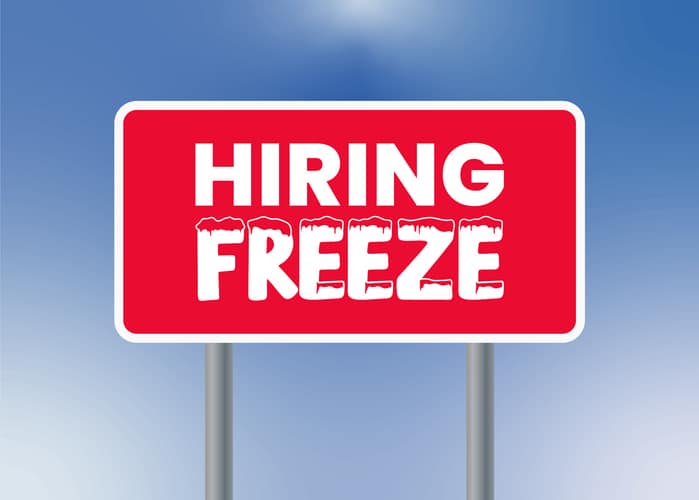
Hiring freezes don’t really stop work. They just take away one of the ways you normally deal with it.
So teams adjust.
They reprioritize. They delay what they can. And when something can’t wait, they find another way to get it done.
For a lot of organizations, that ends up meaning temporary support, at least until things open back up again.
Need staffing support when hiring slows down but the work doesn’t?
Talk to a staffing specialist today!