
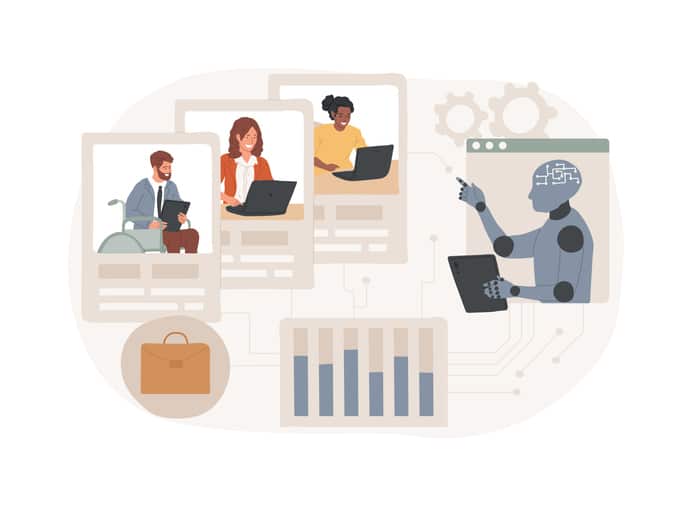
As organizations grow, HR tasks that once felt simple often become harder to manage. Employee records spread across spreadsheets, leave tracking becomes inconsistent, onboarding documents get stored in different places, and reporting takes longer than it should.
An HRIS system is designed to centralize many of those functions. Instead of managing HR data across separate tools and manual processes, employers use an HRIS system to organize employee information, streamline administrative tasks, and maintain more consistent records.
For many organizations, the value of an HRIS system becomes clear as the workforce grows and HR responsibilities become more complex.
Why HR operations become harder as companies grow
Early-stage organizations often manage HR tasks manually. A spreadsheet tracks employee details, onboarding paperwork lives in shared folders, and managers handle leave requests through email or messaging platforms.
This approach can work for small teams. As headcount grows, however, the number of moving parts increases quickly.
HR teams may need to track:
Employee records and job history
Paid time off and leave balances
Onboarding documentation
Policy acknowledgments
Reporting and workforce data
Without a centralized system, information can become fragmented. Managers may rely on different records, and HR teams may spend significant time verifying data instead of focusing on broader workforce planning.
What an HRIS system actually does
An HRIS system serves as a central platform for managing core employee information and common HR processes. While features vary across platforms, most HRIS systems support several core functions.
First, they maintain a structured employee database. HR teams store job titles, employment history, contact information, and key documents in one location.
Second, many HRIS systems support onboarding workflows. New hires can complete paperwork, review policies, and submit required documentation through a centralized process.
Third, HRIS systems often track leave balances and employee requests. This allows managers and HR teams to monitor time off consistently and maintain accurate records.
Finally, many systems provide reporting tools that help organizations understand workforce trends, headcount changes, and other HR metrics.
When companies typically adopt an HRIS system
Organizations often begin considering an HRIS system when manual processes start creating inefficiencies.
Several common triggers include:
Workforce growth that makes spreadsheets harder to manage
Multiple locations or remote teams
Increasing onboarding volume
More complex leave policies or tracking requirements
A need for clearer workforce reporting
At this stage, HR teams often look for systems that can consolidate information and reduce administrative workload.
How HRIS systems affect hiring and onboarding
Although an HRIS system is not always the primary recruiting tool, it often connects closely with hiring and onboarding processes.
Some HRIS platforms integrate with applicant tracking systems. Once a candidate accepts an offer, their information can transfer directly into the HRIS system. This reduces duplicate data entry and helps maintain consistent records.
Onboarding also tends to become more structured. New employees can complete forms, review policies, and submit documentation through a defined workflow rather than through multiple email exchanges.
This structure can help organizations maintain consistency as hiring activity increases.
When an HRIS system may not be necessary
Not every organization needs an HRIS system immediately. Small teams with simple structures may still manage HR tasks effectively using basic tools.
For example, a company with a small workforce, limited hiring activity, and straightforward leave policies may find that manual processes remain manageable.
However, as organizations grow, the administrative effort required to maintain those processes often increases. At that point, a centralized HR system may help reduce complexity and improve consistency.
Final Thoughts
An HRIS system does not replace thoughtful HR leadership, but it can support the structure behind it. By centralizing employee information and standardizing common processes, organizations can reduce administrative friction and maintain clearer records as the workforce grows.
For many employers, adopting an HRIS system is less about technology and more about creating consistent systems that support hiring, onboarding, and day-to-day workforce management.